
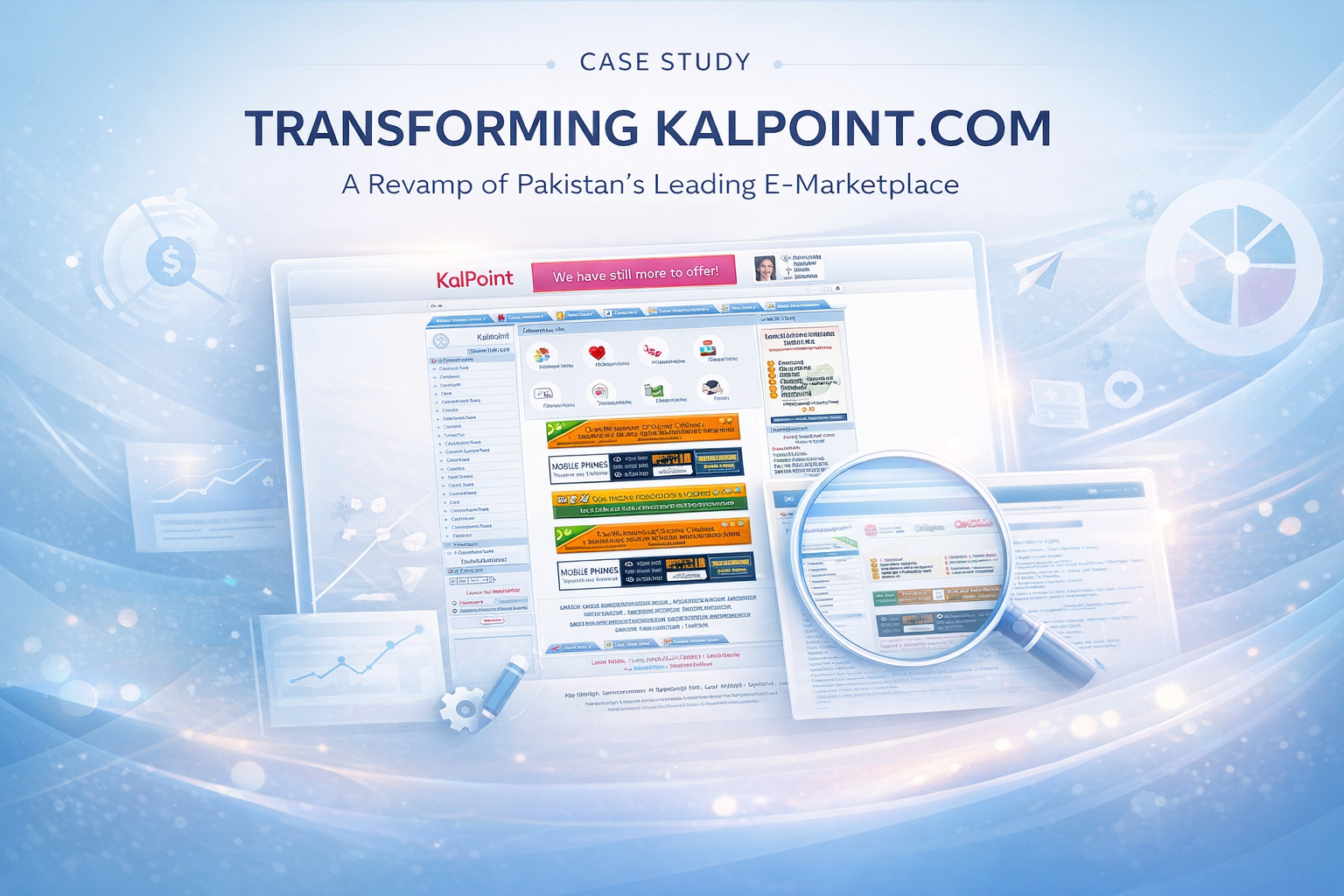
A UI/UX and front-end redesign case study of KalPoint, transforming an early Pakistani web portal into a more engaging, structured, and user-focused digital experience.
KalPoint Web Portal Redesign: Improving Discovery, Trust, and Engagement
In the early years of Pakistan’s web ecosystem, KalPoint emerged as an ambitious digital hub. It brought together directories, classifieds, community forums, and informational services under a single portal. Over time, however, the platform’s structure and interface struggled to keep pace with evolving user expectations, making it harder for visitors to navigate and discover the value hidden within its many sections.
When KalSoft Pvt Ltd initiated a redesign initiative, the objective was clear: modernize the interface while preserving the breadth of services that made KalPoint unique.
A portal with rich information only delivers value when users can discover it effortlessly.
The Challenge
KalPoint had grown organically over time. While its services were valuable, the interface had become visually dense and structurally fragmented.
Key challenges included:
- Overcrowded interface with limited visual hierarchy
- Difficult navigation across multiple services and sections
- Inconsistent front-end design patterns
- Limited clarity in how information and services were grouped
- Reduced user engagement due to navigation friction
From a business perspective, the portal risked losing user attention despite offering diverse services such as employment listings, forums, directories, and informational resources.
My Role
Full-Time Web Designer — KalSoft Pvt Ltd
I was responsible for leading the website redesign and front-end improvement, including research into usability patterns and user behavior. My role focused on transforming a complex portal into a structured, intuitive digital experience while maintaining the portal’s wide service coverage.
Research and Design Approach
The redesign process began with a close evaluation of the existing platform’s usability issues. The focus was on identifying friction points that affected how users discovered services across the portal.
The approach included:
- Studying how users navigated between portal sections
- Identifying cluttered or confusing content areas
- Simplifying the visual structure to guide attention
- Improving the hierarchy of services and categories
- Designing a cleaner and more approachable interface
The new layout emphasized clarity, discoverability, and trust, ensuring users could quickly understand what the portal offered.
Good design turns complexity into clarity without sacrificing the depth of a platform.
UI/UX and Front-End Improvements
The redesign introduced several strategic improvements to strengthen the user experience:
- Clearer navigation structure enabling easier movement across portal services
- Improved visual hierarchy to highlight key sections and categories
- Cleaner front-end layout reducing visual noise and cognitive load
- Better service discoverability helping users find directories, classifieds, and forums faster
- More consistent design patterns improving familiarity and usability
These improvements ensured that users could explore the portal with confidence while still accessing its wide range of features.
Business and User Impact
The redesign significantly improved both usability and perception of the platform.
Key outcomes included:
- Improved overall customer experience and engagement
- Stronger brand perception through a modern interface
- Easier understanding of data and information presented on the portal
- Increased user confidence and trust in the platform
- Higher engagement through better discovery of portal sections
Beyond visual improvements, the redesign helped position KalPoint as a more accessible and credible digital destination.
Working on this project remains memorable because it represented an important stage in Pakistan’s early web evolution—where thoughtful design helped bridge the gap between information abundance and meaningful user experience.